
A History of Our
Square Mile
Blenman-Elm, the largest registered historic neighborhood in the country, is representative of much of the development of the City of Tucson, including issues of land speculation and growth, encroaching density, zoning, and land use planning.
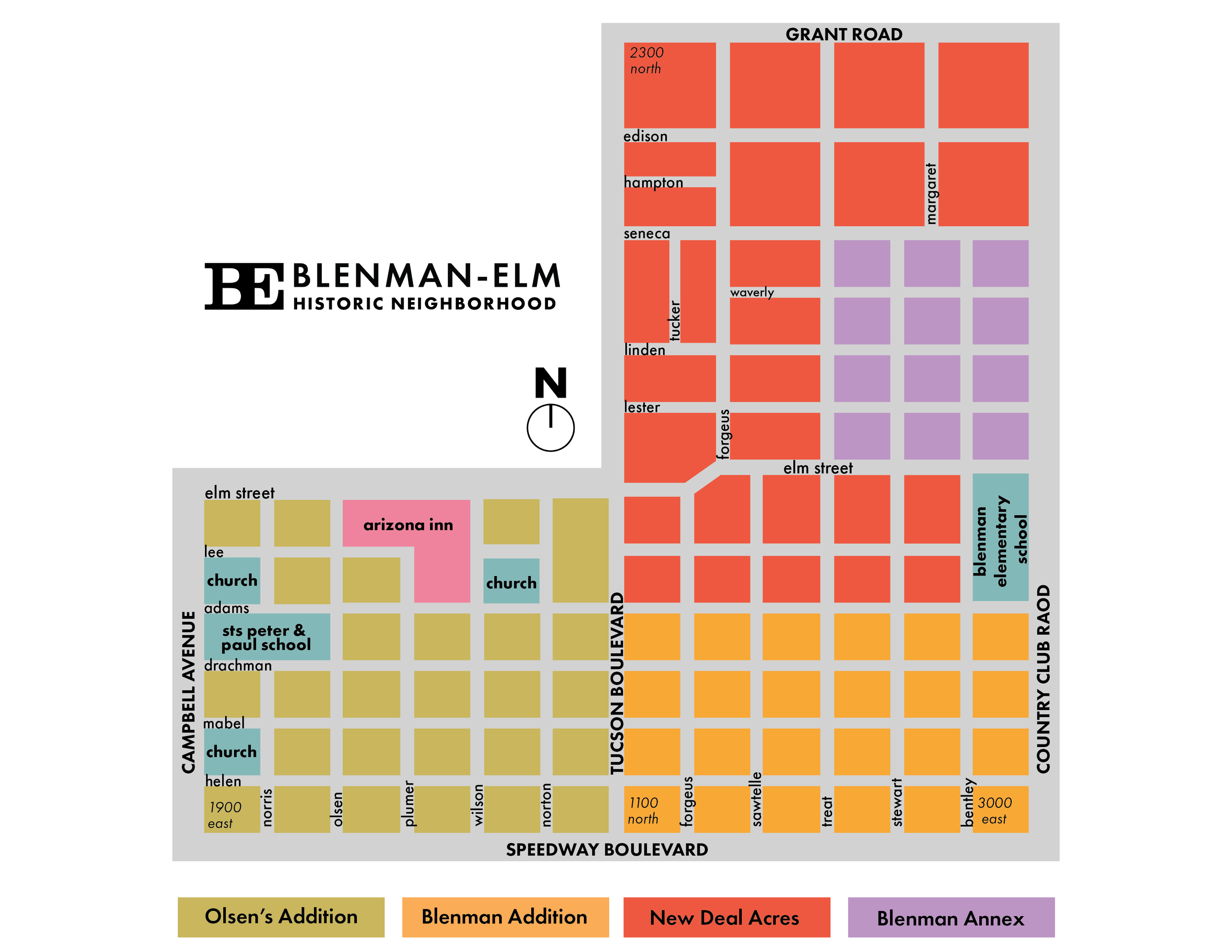
Blenman-Elm Neighborhood is the ¾ square mile bounded by: Speedway, Campbell to Elm west of Tucson Blvd., to Grant east of Tucson Blvd., and Country Club Road.
The neighborhood was cobbled from three distinct quadrants that reflect their separate histories of annexation and land use patterns. The 4th quadrant of our square mile is the Catalina Vista Neighborhood.
-Alice Roe, Former BENA President
(Information sourced from the Blenman Elm National Historic District Nomination, Tucson Post WWII Residential Subdivision Development, and personal stories)
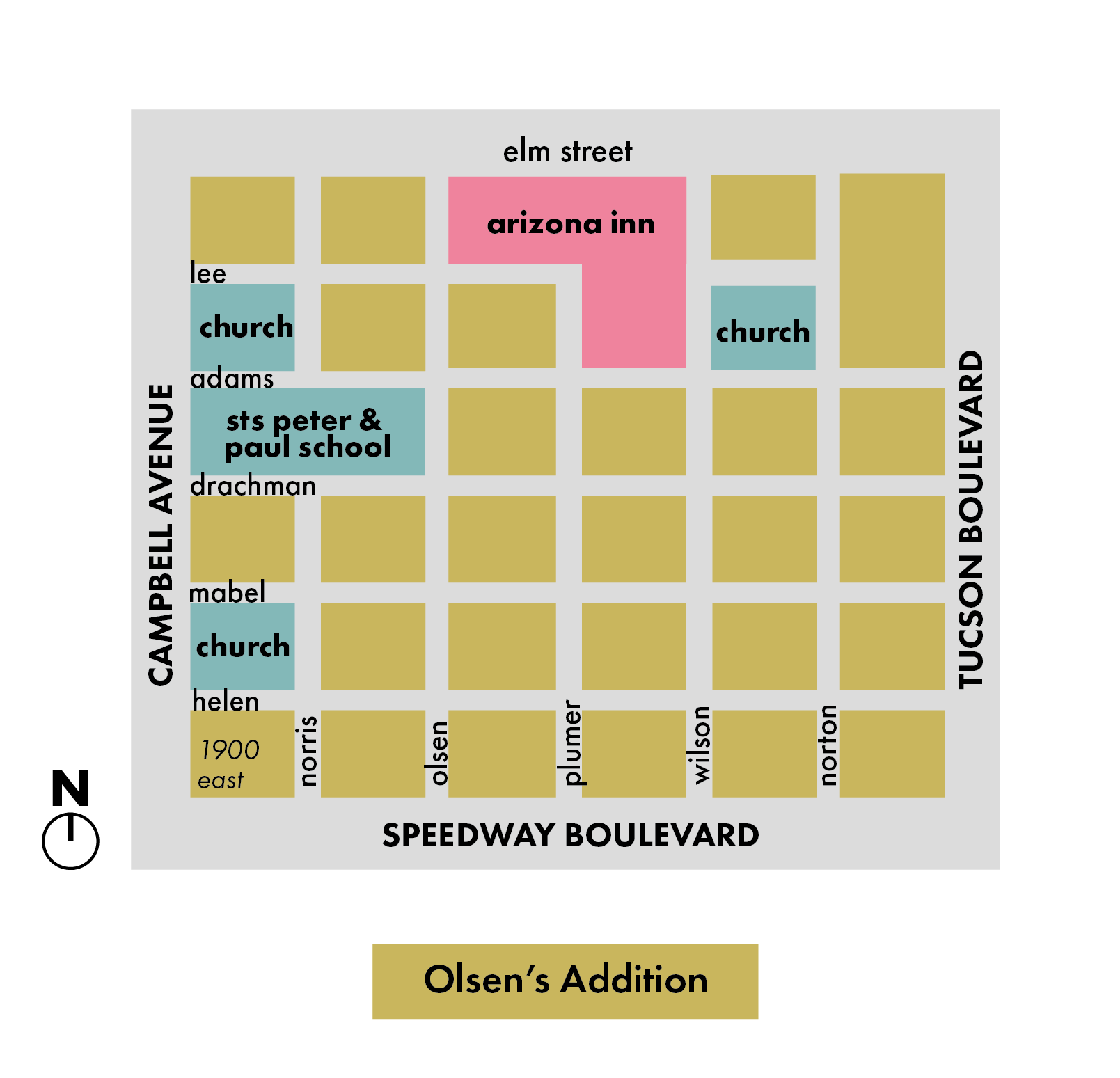
The South-West Quadrant is the oldest. Originally this quadrant was patented by grant from US Government for cash payment by Andrew Olsen in 1892, for the 160 acres (1/4 sq mi.) Olsen then laid out the streets and lots on a plat in 1903.
The oldest home in this quadrant is at the NE corner of Helen and Plumer. This was the Olsen residence of Olsen’s Addition. This home was built in the early 1900’s, renovated in 1928. The stump of a Eucalyptus planted for the 1928 renovation is still visible in the front yard.
There are many homes from the twenties including some designed by architect Josias Joesler. Parts of this quadrant were annexed by the City in 1922 and 1924. For a time the City Limits were at Tucson Blvd. When Isabella Greenway was planning the Arizona Inn, she chose a location within the City limits; she wanted City Water service rather than to maintain wells.
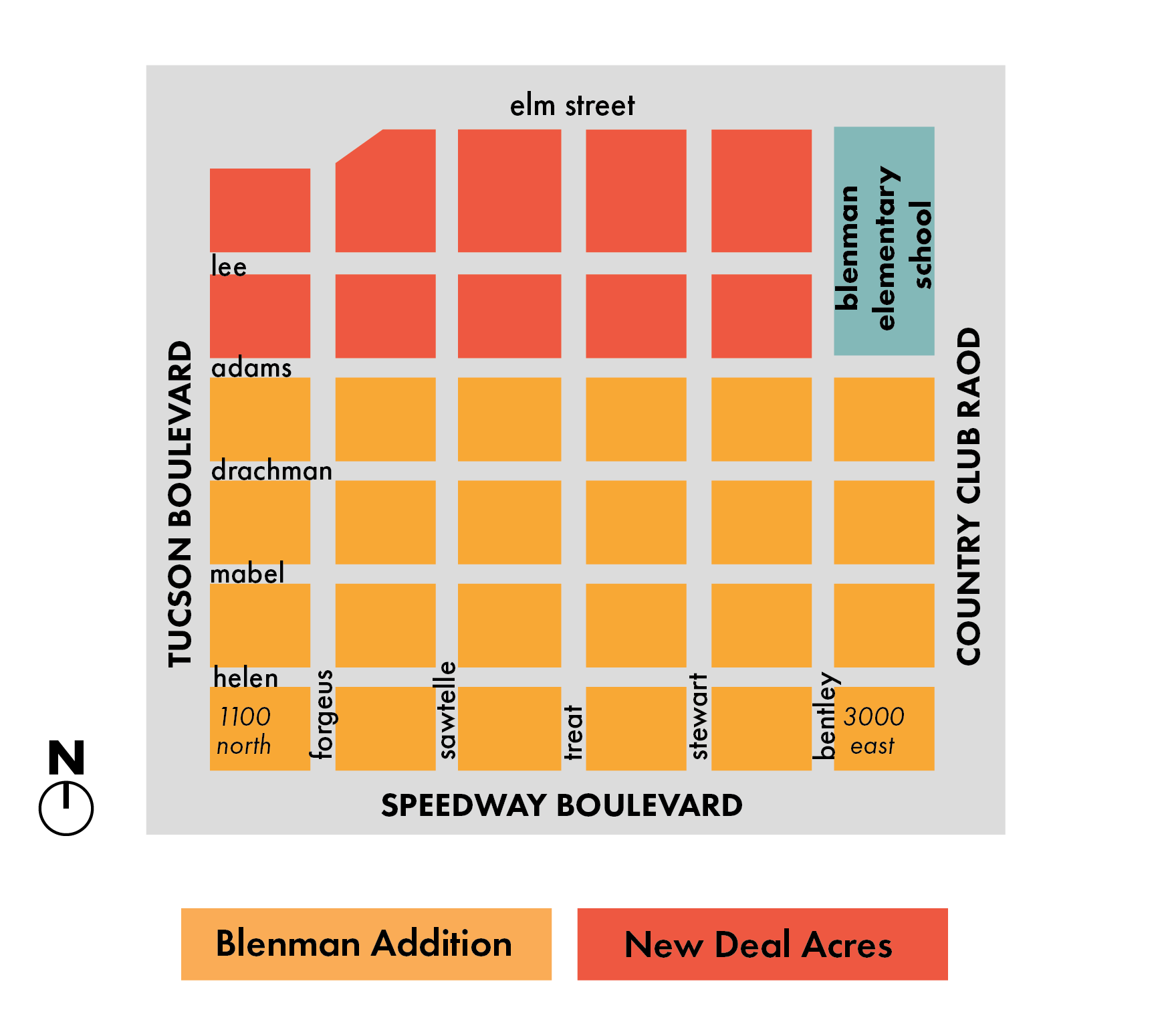
The South-East Quadrant covers Tucson to Country Club, Elm to Speedway. This was homesteaded by Charles Blenman in 1903, the same year that Andrew Olsen platted the Olsen Addition. Charles Blenman was born in England in 1861, but went on to become an American land speculator extraordinaire. He also owned Nob Hill, SW of Speedway and Campbell. Blenman was a London trained lawyer who arrived in Tucson 1891 and was active in the community until his death in 1936.
Blenman School, which opened for classes in 1942, is named for him. This quadrant consists of Blenman Addition, the area south of Adams St. platted in 1926, annexed by the City in 1948. North of Adams was part of the original Blenman homestead area, and was platted with New Deal Acres (north of Elm) and became City in 1955.
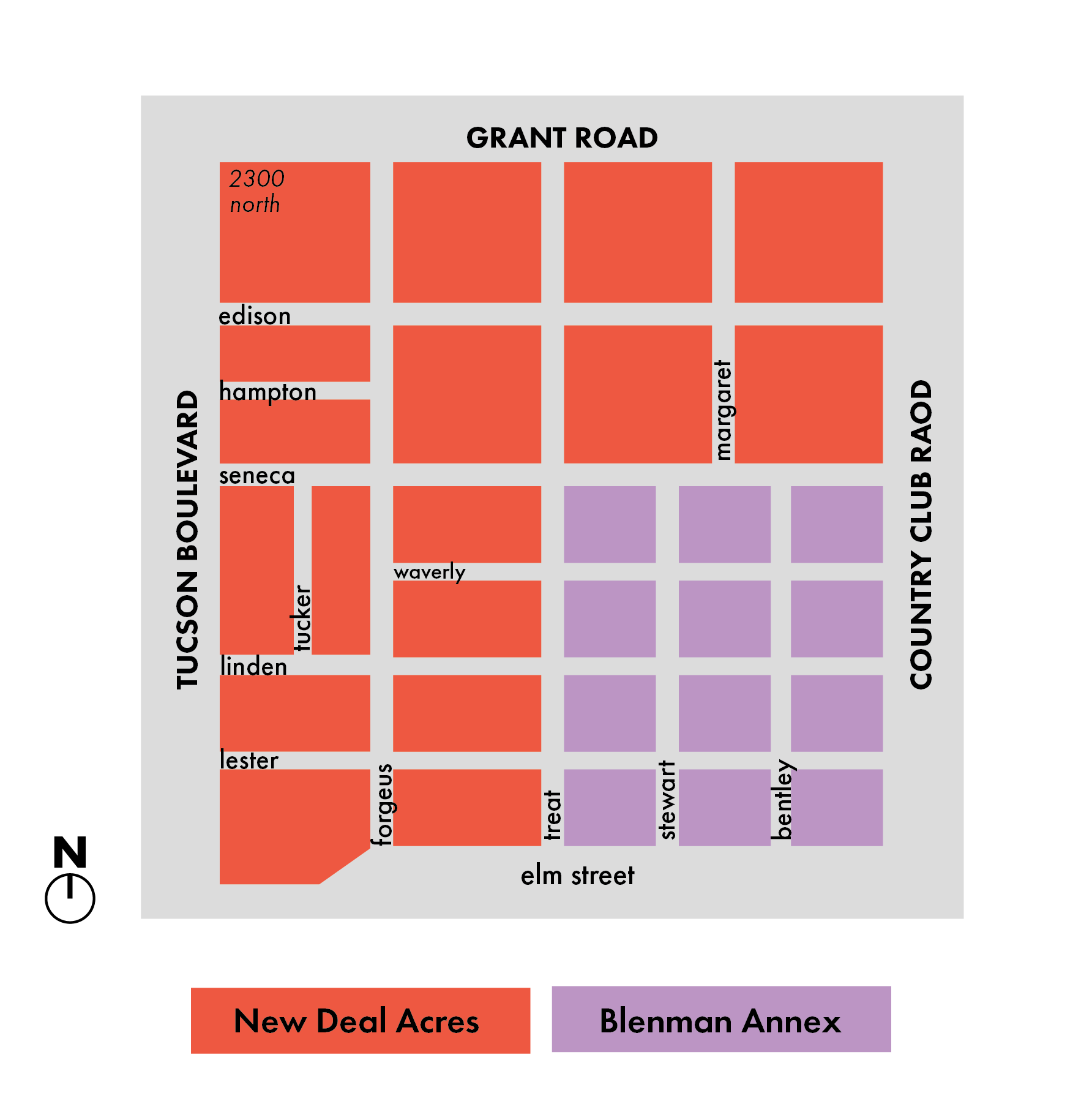
The North-East Quadrant was both patented and sold to Charles Blenman in 1904. The area was platted with New Deal Acres in 1934 after Blenman sold it to J. W. Angle. Charles Blenman and his wife Louise had made a practice of selling off whole blocks of the platted land to a buyer who would then sell off the lots as the buyer wished.
Blenman Annex, (north of Elm, east of Treat, south of Seneca) was platted by Angle in 1939. Land use patterns north of Seneca were not separately platted into lots, but instead were sold off to individuals as large blocks, that then individuals subdivided as needed.
Again, Angle followed the same pattern of selling off a whole block to a single buyer. The NE quadrant did not become part of the City until the massive annexation of 1959 when the City annexed all the area east of the City to Kolb and north to Roger Road, 45 sq. mi. in all.
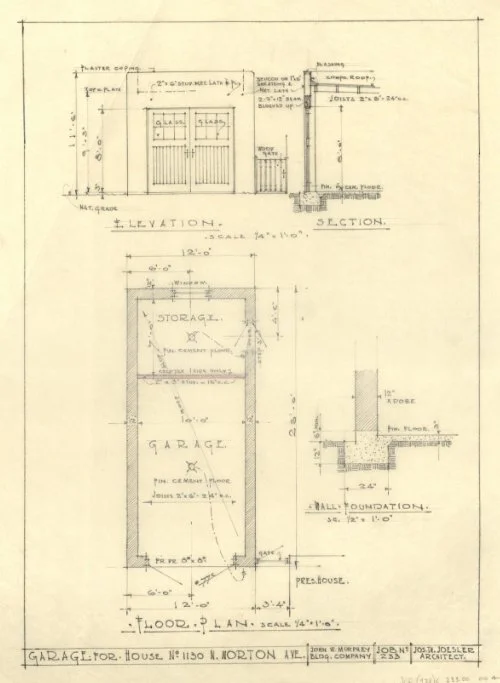
Original Josias Joesler design for an existing Blenman Elm garage
Build Out: Our square mile was mostly built out by 1960. There have been a few more recent residences, like the town homes on the Elm St. curve and the homes between Mabel and Drachman, Wilson and Plumer. That was a property held by the UA for a potential well site, but the UA decided in the late 1970’s to sell off the scattered lots it had held for wells.
Currently, many residents choose to restore their historic homes and gardens with great pride of place, so that they may live on to delight future generations of residents.
Blenman-Elm National Historic Neighborhood boasts both a storied past and a vibrant present in the heart of Tucson, Arizona
The Arizona Inn
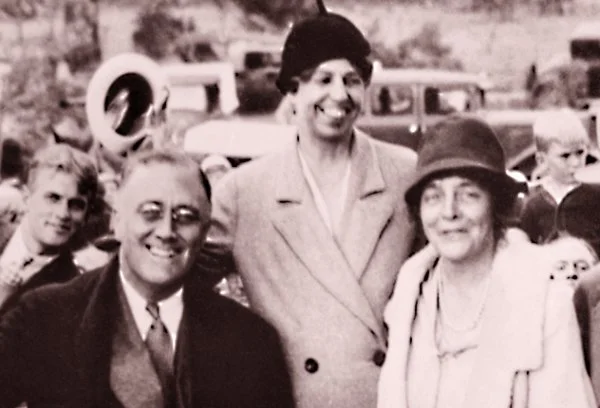
Arizona’s first Congresswoman, Isabella Greenway (and a bridesmaid at the wedding of Franklin and Eleanor Roosevelt) built her house in 1928 on Olsen at Elm.
She opened The Arizona Inn adjacent to her home in December 1930 and expanded in 1937. There had been talk of the need for tourist accommodations. Leighton Kramer had offered the City Rancho Santa Catalina for a hotel site. The City declined, but private developers then built the El Conquistador Hotel where El Con Mall is now.
Mrs. Greenway had been supporting the WWI vets through a furniture making business called The Hut. With the depression, there was no market for the wares. The story is that she built a hotel to use the furniture.
The Inn was designed by architect M H Starkweather. In addition, he was the architect for El Encanto Estates and other buildings in Tucson. His personal residence was at the NE corner of Adams and Olsen and has quite a distinctive Art Deco facade.
The Arizona Inn pink, the tale goes, was the color of Mrs. Greenway’s rouge in the setting sun. She tapped her cheek and said this is the color, setting the tone for one of Arizona’s greatest human-built treasures, where we are privileged to hold our neighborhood association meetings.
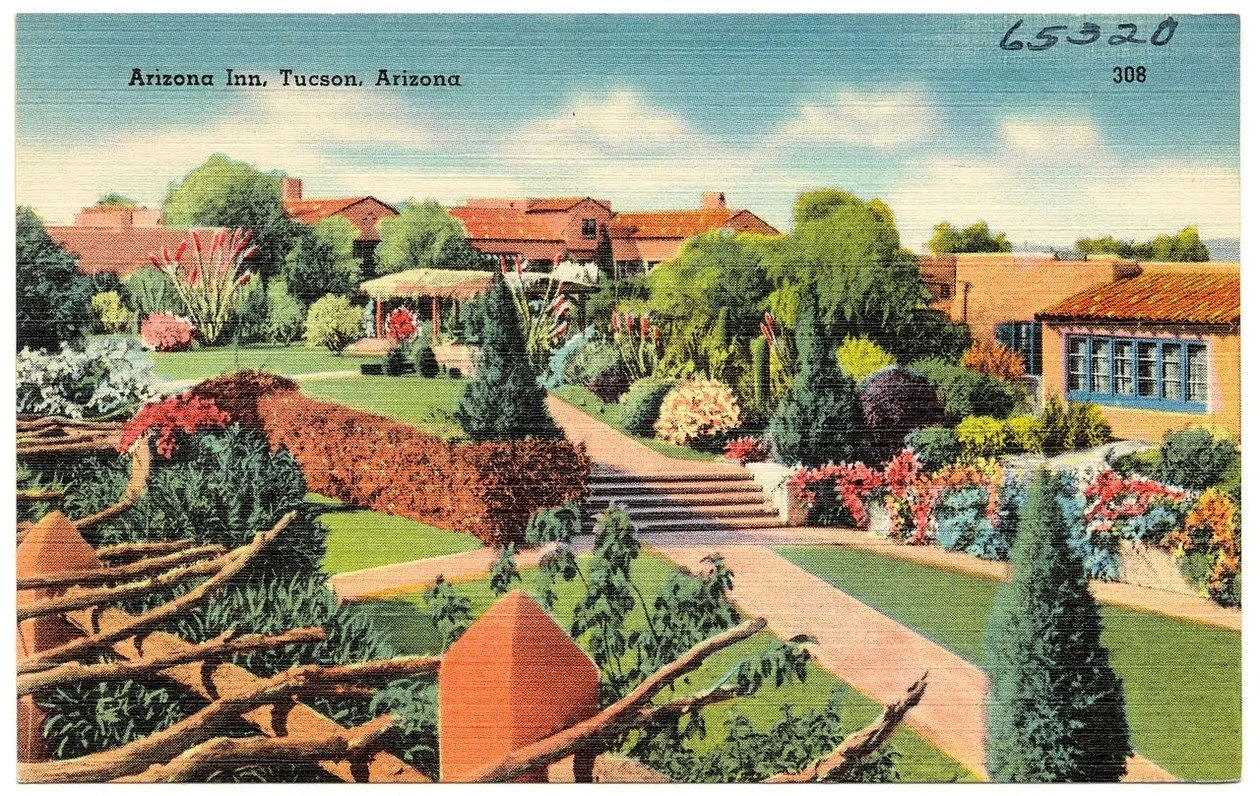
Arizona Inn historic postcard from the 1930s
Isabella Greenway and the Roosevelts on the 1932 campaign trail