
Blenman Homes
Then & Now
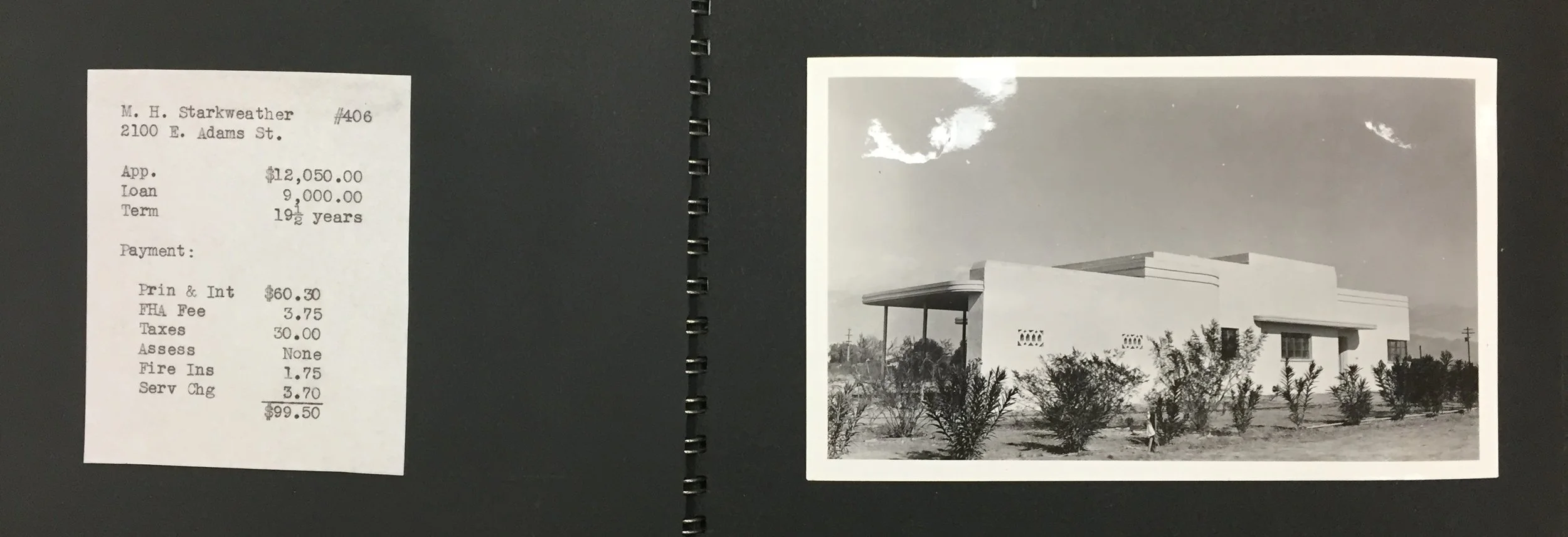
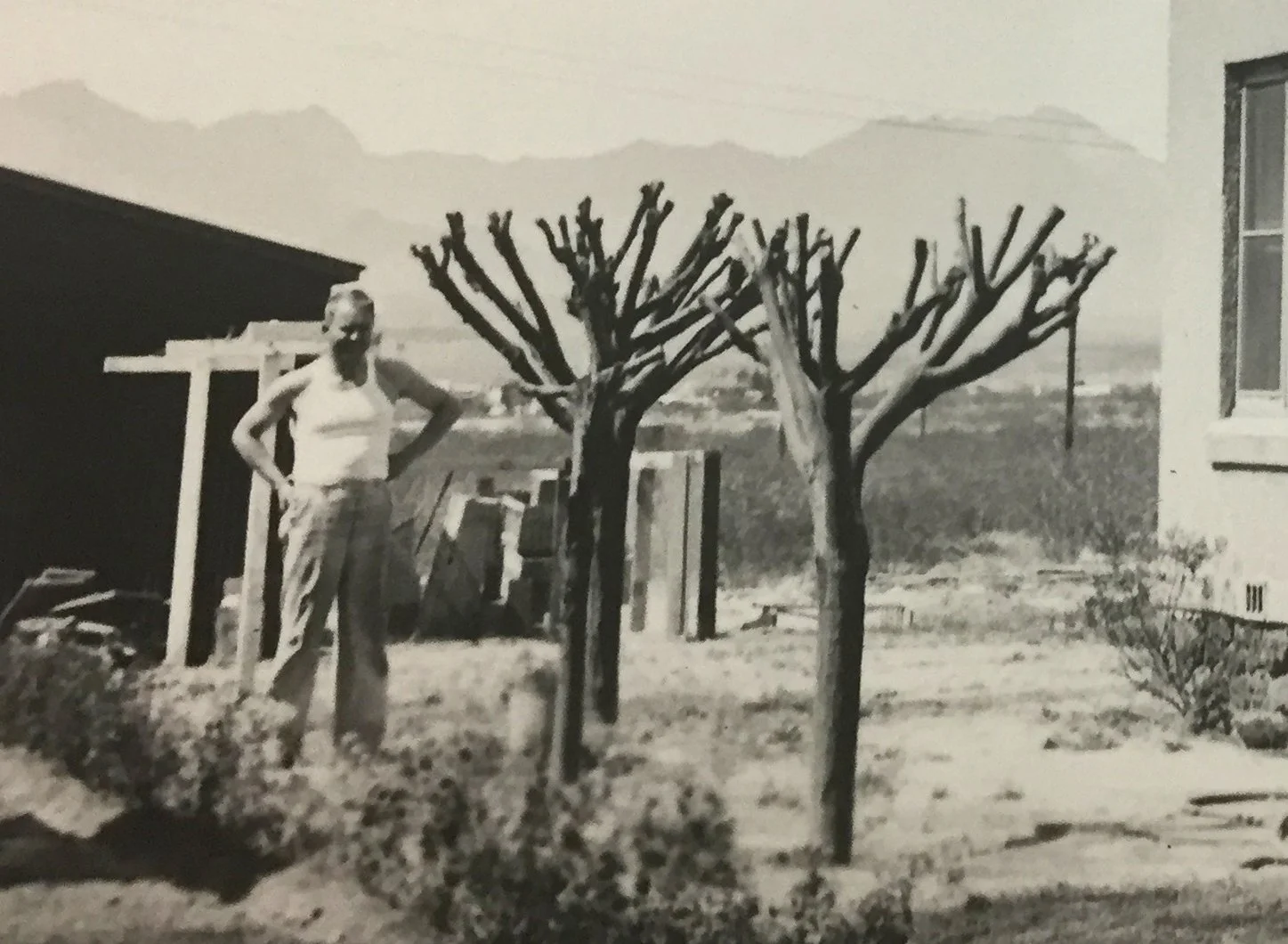
During the late 1930s and early 1940s an unidentified mortgage broker at the Valley National Bank spent some time wheeling around Tucson with his 2-1/4 x 3-1/4 camera to visit his home loan clients. He pulled over to the curb, snapped a quick photo of their property, and drove away.
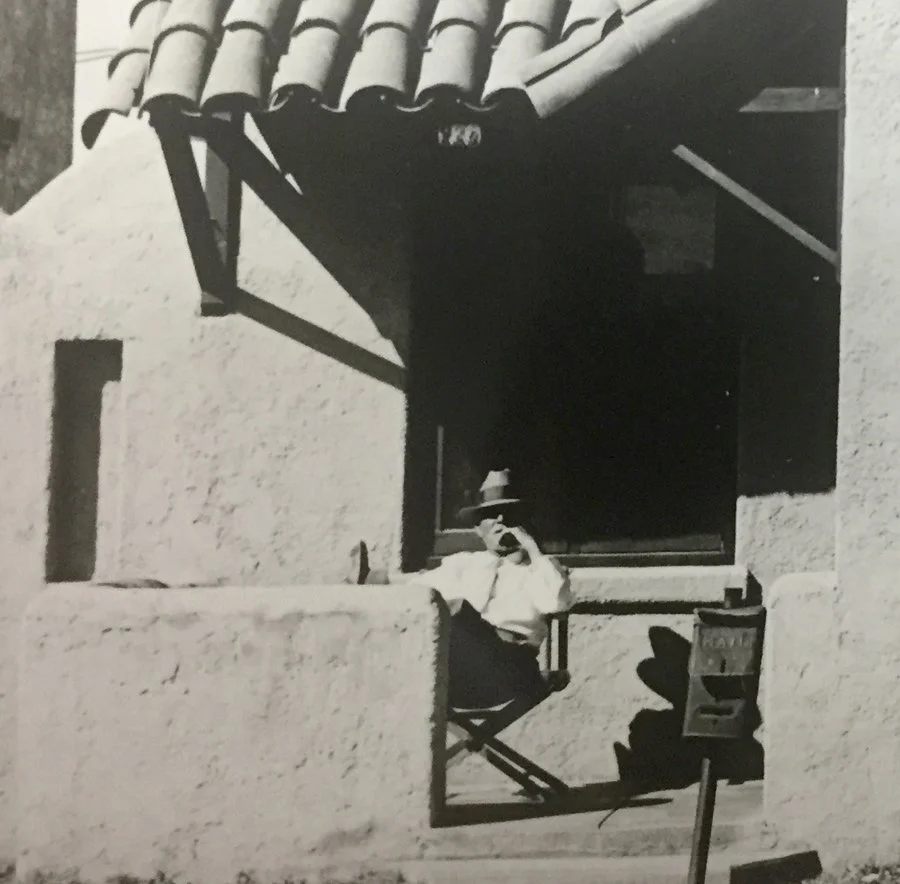
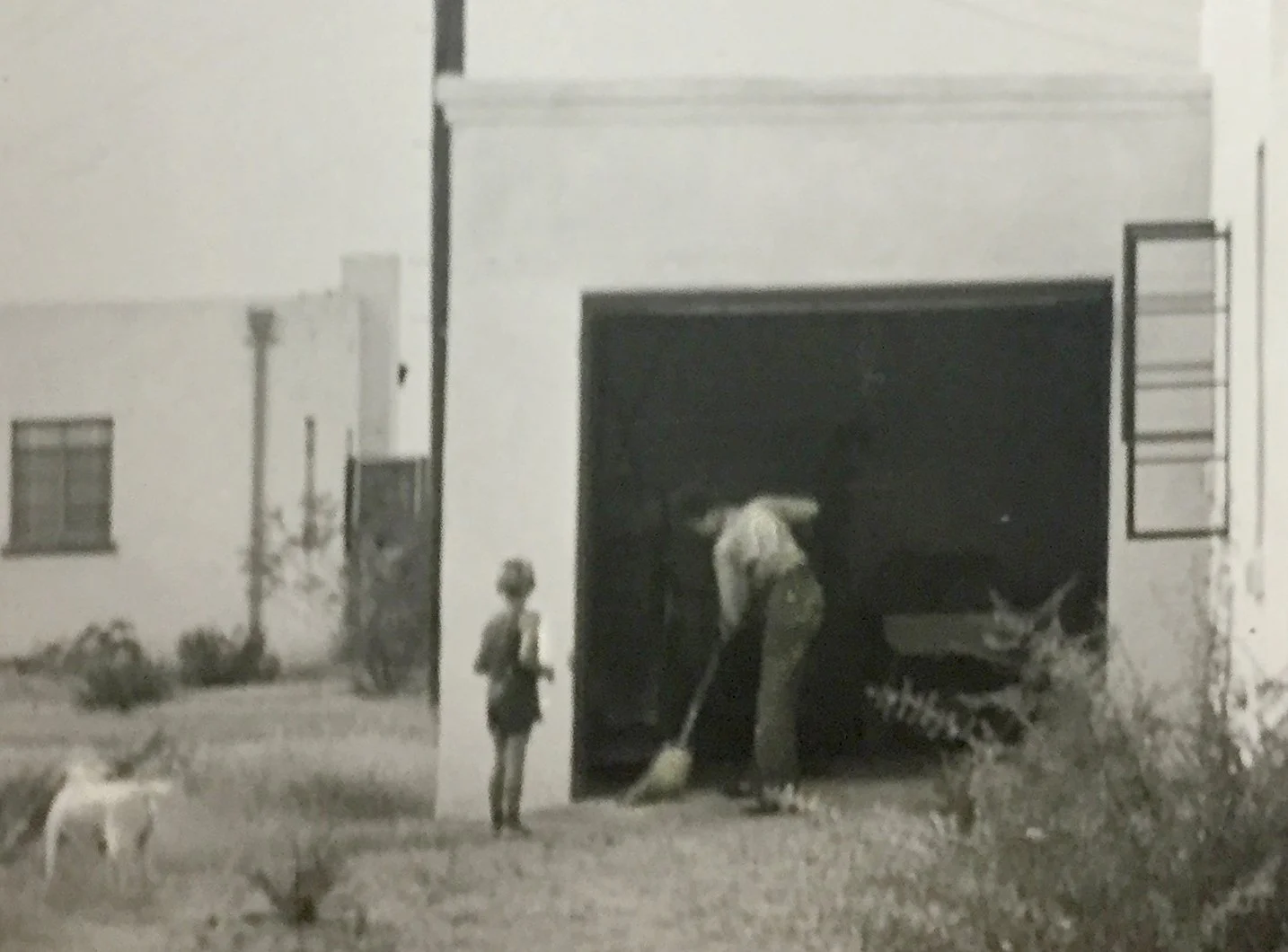
Along the way he even caught people and pets at play, reading the paper on their porches, their jalopies parked in the driveway. After the photos were developed, he carefully pasted each snapshot one per page in a black-paper photo album across from a carefully typewritten accounting of each owner, address, appraisal, loan, taxes, and insurance. Over the course of years, he created 14 of these albums. 119 of these homes are located in the Blenman-Elm neighborhood.
In the 1960s, another Valley National Bank employee named Cirino Scavone rediscovered these documents, now without a business use, and somehow convinced his boss to let him take them home to save them from the dumpster. In 1990, the Scavone family donated them to the Arizona Historical Society (AHS) library where they reside today. Thanks to AHS for the use of the images on this page.
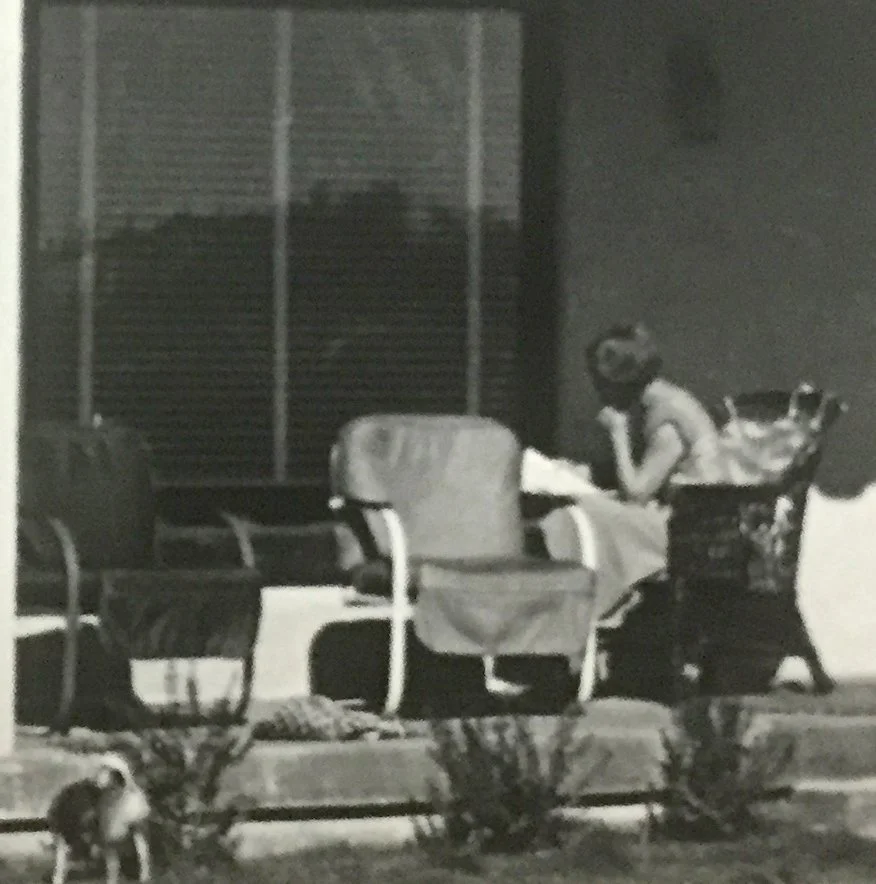
Taken as a body, these photographs are an astonishing document of what Tucson felt like in the early years of its expansive growth. Many of these homes are new, with little vegetation, and stand like small monuments to the resilience of humanity, taking a stand at the edge of the desert frontier, proudly broadcasting to all viewers the sense of home unique to each owner.
People, animals, and cars are also caught in the viewfinder, accidentally encapsulating a perfect moment of everyday life that links us across the generations. There are Pueblo and Spanish Colonial fantasies, Streamline Deco statements, and hunkered-down bungalows. In many, the mountains watch over warily in the background. A time capsule of mid-century architectural fashion is laid out in these pages.
When I first encountered the homes in this astonishing time machine, I was seized by a desire to find out what they look like today. In light of this comprehensive view of how we lived then, who are we now and what do we value? How has the context for these homes changed? What signs of the past remain?
I set out on my first expedition in 2016 — archaeology in plain site. I looked up the addresses, pulled my twenty-first century jalopy up to the curb, and snapped a photo with my iPhone from the same angle and the same time of day and season as the original.
I found that many homes have additions, others have walls or large obscuring trees, and others have been demolished completely. In the handful of homes I have rephotographed so far, stories already flow like the Santa Cruz during a monsoon. Driveways change sides, windows are plastered over, sleeping porches give way to air conditioning. Homes become businesses. Small adobes become large mansions. Priorities and styles change.
These images — now and then, side by side — invite engagement, discussion, and introspection. Who were we? Who are we? What is still important to us now?
Below are 19 Blenman-Elm homes with sliders allowing you to explore the original snapshot layered over my 2016 photos taken from the same angle and with the same lighting and weather conditions. I apologize if these are a bit rough; I had intended to create a long-form book with all the images, but was not able to find the time or funds in 2016. Perhaps that will happen someday soon, should popular demand materialize.
Stephen Farley, Artist
Blenman-Elm resident since 1995
This page © 2025 Stephen Farley